
the smallest bite, the biggest story
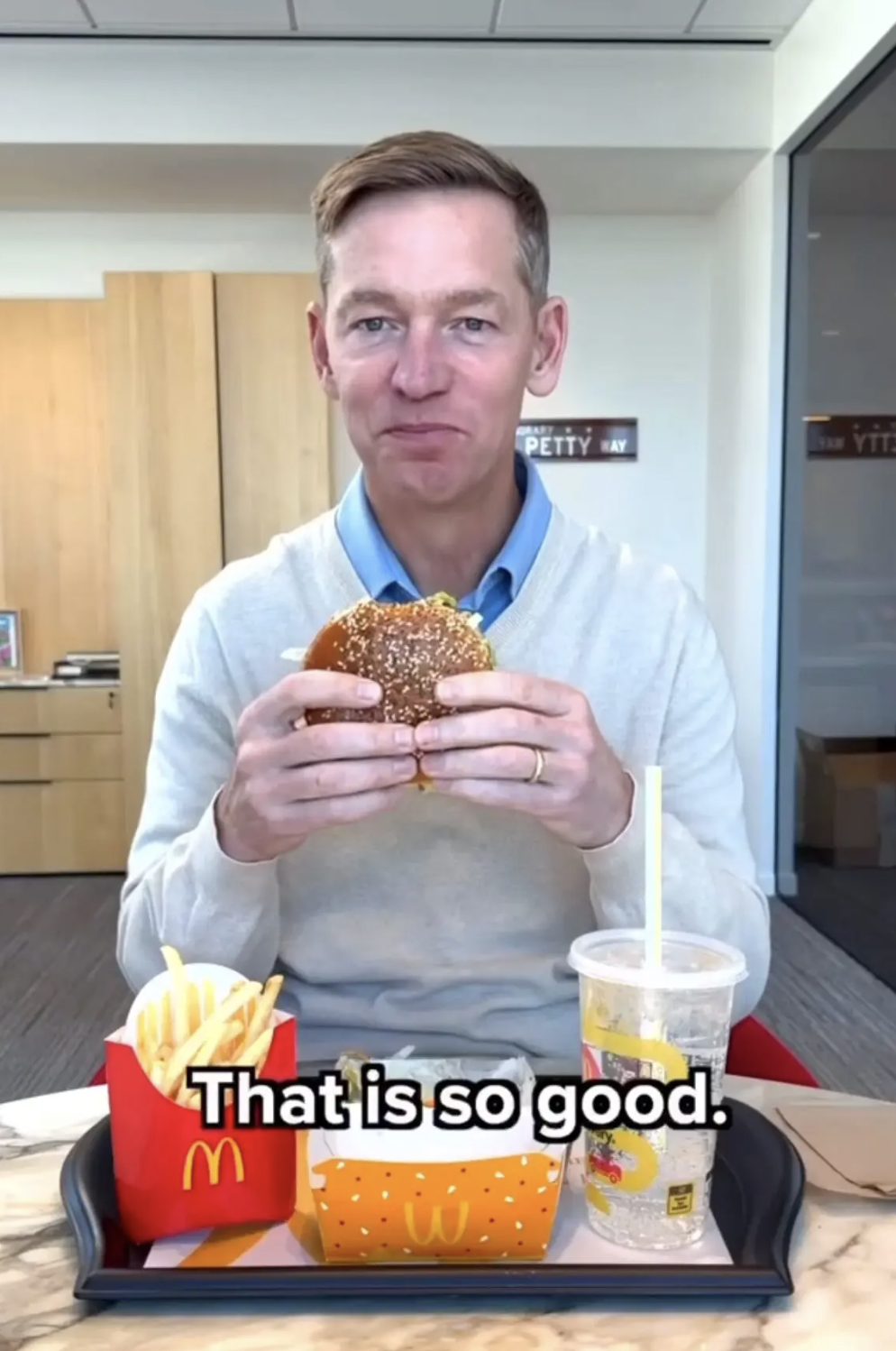
McDonald's CEO took a tiny bite of a burger. The internet took a massive one out of him.
In early February, McDonald's CEO Chris Kempczinski posted a video to his personal LinkedIn account promoting the brand's upcoming Big Arch — the company's biggest new U.S. burger launch in years. No agency. No production crew. Just a guy at a break room table, unwrapping a burger, describing its ingredients, and taking what he called "a big bite for a Big Arch." The problem? The bite was, by most accounts, decisively not big.
The video sat quietly on LinkedIn for weeks. Then TikTok found it.
Comedian Garron Noone stitched a reaction video that racked up over 10 million views. The phrase "I love this product" — Kempczinski's wooden delivery of his own burger — became the internet's shorthand for corporate disconnection.
Rival brands scrambled to get in on it. Burger King filmed its own CEO taking a noticeably larger bite of a Whopper and captioned it "Thought we'd replay this." Wendy's posted a taste test with the line "This is what it looks like when you don't have to pretend to like your 'product.'" Jack in the Box. Costco. A&W. Everybody had a joke. Nobody was letting Kempczinski breathe.
And yet. The Big Arch launched nationally on March 4, 2026. Sales beat expectations. The video pulled nearly 11 million Instagram views. Kempczinski's following grew 30% overnight. McDonald's recorded its single-highest conversation day across all platforms, with 47,900 total mentions and a reach of 5.8 billion. By any meaningful measure of awareness and sales impact, the campaign worked. It just didn't work the way anybody planned.
this wasn’t kempczinski’s first rodeo
A lot of marketers look at this story and pull the wrong lesson. They see a CEO go viral and think: get our CEO on camera. They see a lo-fi iPhone video outperform a polished campaign and think: production value is overrated. They see the memes and think: controversy is a strategy. None of that is quite right. What actually happened here is more specific — and more useful.
Kempczinski had been building his personal social presence for years before this moment. He'd grown a LinkedIn following of over 168,000. He'd won a Shorty Award in 2025 for executive communications. When the video went viral, it wasn't spreading into a vacuum. It was spreading into an infrastructure he'd already built. The reach existed because the habit existed. Most executives who try to "go viral" haven't done that work. They show up once, under pressure, with something to sell, and the audience can smell it from a mile away.
Self-Awareness Is a Strategy
The other thing worth noting is what McDonald's did after the mockery started. When the brand's official Instagram posted a photo of the Big Arch with the caption "Take a bite of our new product" and dropped a comment saying "Can't believe this got approved" — that was a choice. It was a small move, but a deliberate one. The brand wasn't groveling. It wasn't getting defensive. It was showing the audience it understood what was happening and didn't need to be protected from it. That kind of self-awareness is harder to manufacture than people think, and it matters more than most brands are willing to admit.
Virality requires authenticity
The CEO burger video wasn't engineered to go viral. It went viral because it felt like a man who does not eat McDonald's pretending to eat McDonald's, and people found that hilarious and relatable in equal measure. The internet doesn't reward polish for its own sake. It rewards recognizable human behavior — including the awkward, the stilted, and the unintentionally honest.
For marketers managing brands with real stakes attached, this case study holds something important. Mixed sentiment is not automatically a failure condition. The instinct when criticism picks up is to pull back, clarify, or issue a measured response. But awareness has value on its own terms, even when the framing isn't ideal. McDonald's Big Arch entered the cultural conversation in February. By the time it launched nationally in March, the entire country already knew what it was. That kind of pre-launch awareness is something most brands would spend millions trying to buy.
Your CEO Is a Brand Asset
The deeper principle is this: a leader willing to show up with some regularity and some genuine personality creates the kind of social capital that no single campaign can replicate. Weber Shandwick research has found that 81% of executives believe a visible public CEO profile is essential to their company's reputation — but most executive social strategies are either absent entirely or so carefully managed they feel like press releases with a headshot attached.
What Kempczinski showed, even accidentally, is that the work compounds. His 168,000 LinkedIn followers didn't materialize from one viral bite. They showed up over years of consistent, human content. The viral moment was the harvest. The strategy was the years of planting.
Most brands don't need a crisis to make this work. They need consistency, a real point of view, and a willingness to be seen before there's something to sell. Get your leaders on the record. Build the platform before you need it. And when the moment comes — whether it's a product launch, a cultural conversation, or a bite that's just a little too small — you'll already have the audience to meet it.
