
The Next Rollneck Generation
J.Crew finds it’s social voice
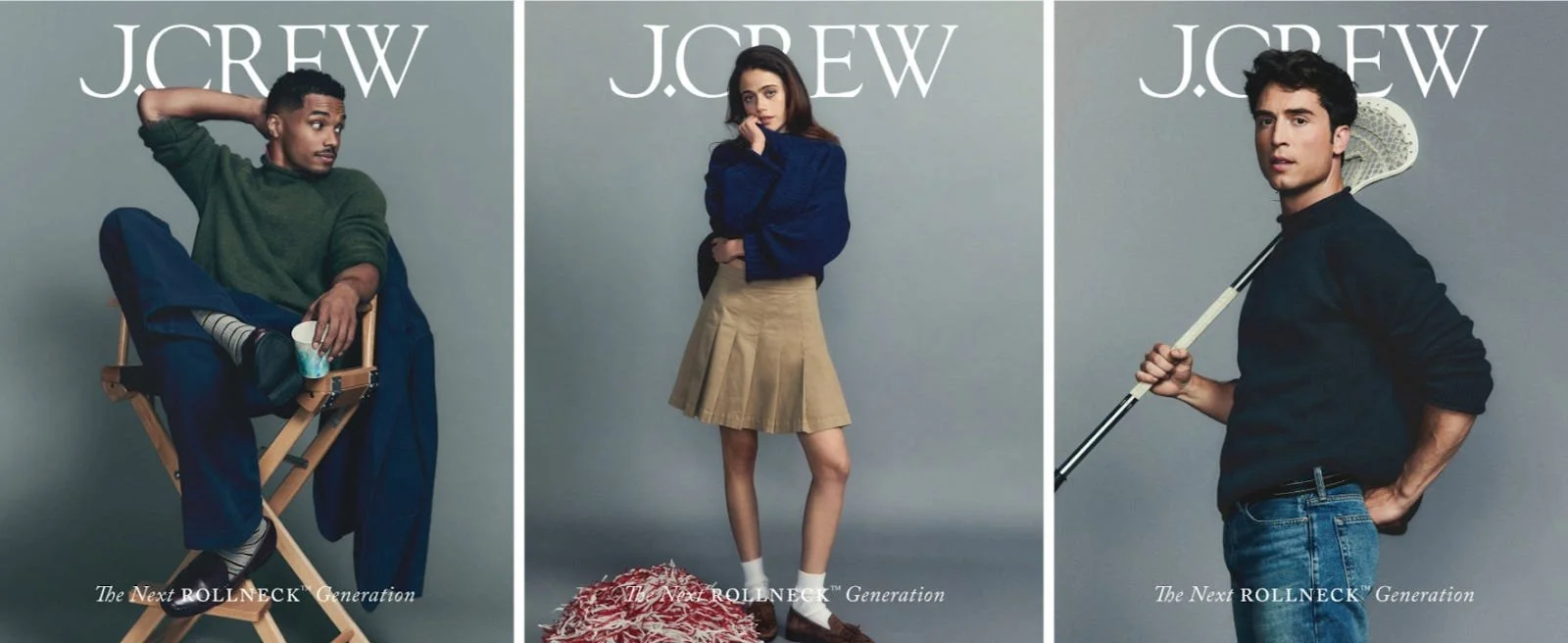
Social works best when it builds culture and drives measurable growth at the same time. Too often, brands approach platforms like TikTok with a split personality. On one side, there’s the “let’s go viral” mindset. On the other, the pure performance lens focused strictly on conversions and ROAS. The brands that are winning right now understand that the real leverage sits in the overlap. Platform-native creativity shapes perception. Perception drives search. Search drives revenue. And when you measure it properly, you can see the full chain reaction.
J.Crew recently demonstrated that balance with the revival of its classic rollneck sweater. Rather than dusting it off and leaning entirely on nostalgia, the brand launched “The Next Rollneck Generation,” positioning the piece as timeless but culturally current. The creative centerpiece featured comedian Benito Skinner delivering an overly dramatic reading of a real customer review. The tone was self-aware and TikTok-native. It didn’t feel like a heritage brand forcing itself into the feed. It felt like the brand understood the language of the platform.
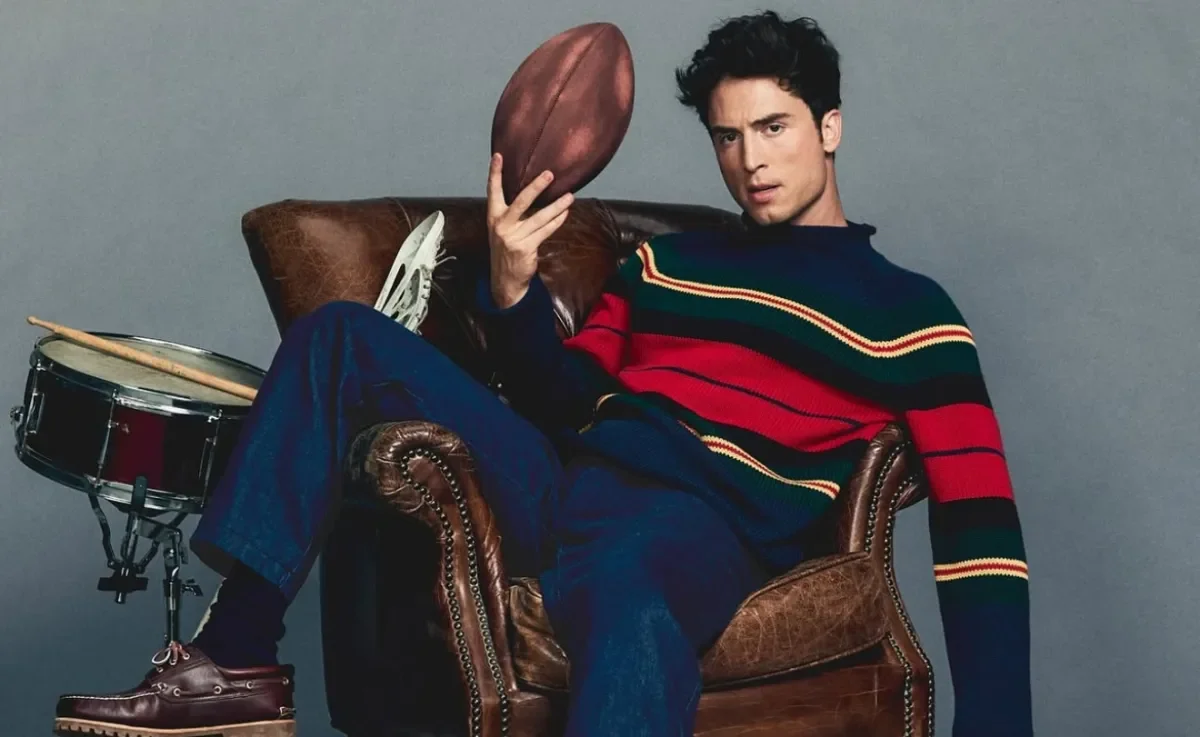
Importantly, this wasn’t just about tone. It was about intention. J.Crew treated TikTok as both a storytelling engine and a measurable growth driver. Following the campaign launch, Google searches for “J.Crew rollneck” spiked 900%. New online customers increased 40% week over week. The push drove 9,200 incremental orders and $2.1 million in incremental revenue. Exposure to the campaign also generated tens of thousands of incremental searches at an efficient cost per search. The humor built relevance. The relevance drove action. And the action showed up in the numbers.
The broader context makes the strategy even more compelling. Founded in 1983, J.Crew built its identity around classic American prep: oxford shirts, chinos, blazers, and understated staples that signaled East Coast polish. That legacy is both an asset and a constraint. Heritage gives you credibility, but it can also box you in. In today’s fashion landscape, legacy brands compete against digitally native challengers that move faster, speak more fluently to younger audiences, and are built for social from day one.
Instead of abandoning its archive or chasing micro-trends, J.Crew chose reinterpretation. The rollneck already had cultural weight. It had history. What it needed was reframing. By pairing the product with creator talent that resonates strongly with Gen Z while still appealing to a broader fashion-conscious audience, J.Crew expanded its reach without alienating its core base. The campaign modernized perception without dismantling the brand’s foundation.
There’s a bigger lesson here for marketers. Social media isn’t just a distribution channel. It’s a perception accelerator. When you design creative that feels native to the platform and back it with a measurement plan that tracks search lift, incremental orders, and revenue impact, you close the loop between brand and performance. You stop arguing about whether upper funnel or lower funnel matters more and start building systems where one feeds the other.
For legacy brands especially, that’s the path forward. You don’t need to reinvent yourself every season. You need to reinterpret what you already own in a way that travels across feeds, sparks conversation, and translates into measurable demand. J.Crew didn’t discard its identity. It reframed it for the algorithm. And in doing so, it proved that when social is treated as both cultural stage and growth engine, heritage can become an advantage rather than a liability.
